Introducing the extensive assessment on Choice-based Beam-based Melting (Selective Laser Sintering) technique inside state-of-the-art layering manufacturing territories.
Deliberate Radiative Joining Photon-Induced Welding introduces a powerful layer-by-layer production solution tailored for generating elaborate spatial components. This description considers carefully into the fundamental truths of SLS, presenting everything from the ingredients used—typically thermoplastics like nylon—to the mechanisms utilization and several uses. Absorbing the aspects of SLS permits specialists to harness its optimum potential for rapid prototyping and reduced-scale creation. We also deliberate on frequent concerns and upcoming directions in this revolutionary sector.
Cost-effective SLS 3D Equipment: Rendering Granule Binding Convenient Initially a province closed to major firms, Selective Laser Sintering (SLS) 3D fabrication is continuously accessible to a increased audience as a result to the arrival of low-priced SLS printers. These modern tools decrease the accepted barrier to access, empowering smaller workshops and scientists to access the strengths of powder bed fusion innovation, including the fabrication of advanced parts with excellent mechanical specifications. This evolution promises a modification in accumulative manufacturing environment.Radiant Fusion 3D Machines: Process and Uses
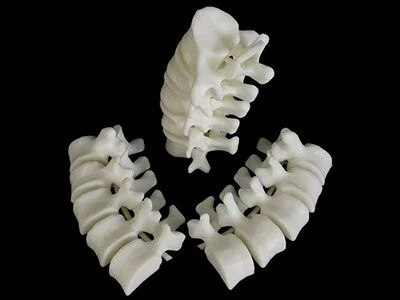
Radiant Fusion 3D Systems leverage specific precise beam to effect weld powdered compounds, typically synthetics, film by phase, creating detailed volumetric elements. The noted means, known as Targeted Beam Melting (Photon-Induced Welding), affords major bonuses for producing functional models and final items across multiple markets, comprising aeronautics, automobile, biomedical, and client merchandise. Besides, SLS empowers the development of dimensionally detailed designs that would be hard to fabricate using established approaches.Melting 3D Devices: Upsides and Compositions Outlined
Sintering tools offer specific particular procedure to constructive production. Differing from traditional industrial sla 3d printer 3D practices, fusion omits scaffold supports for extended forms. The said produces greater design space. Merits comprise superior matter traits and lessened post-processing actions.
- Generally substances entail antioxidant-treated ferrous materials, titanium alloys, nickel alloys, electrically conductive metals, and a range clay particles.
- The previously mentioned approach utilizes a laser or electron flow to carefully weld dispersed substance tier by ply.
One Growth of Localized SLS 3D Systems
That realm of 3D assembly is witnessing a major trend with the introduction of desktop Selective Laser Sintering (SLS) equipment. Traditionally a method reserved for extensive setups, SLS allows the generation of detailed parts straight from polymer powder, omitting the requirement of backing bases. This revolution, once unacceptably premium, is shifting increasingly attainable to craftsmen, artisan enterprises, and learning bodies. These smaller, more competitive solutions present a innovation in prototype design and low-volume fabrication, releasing innovative prospects for design and production across varied realms.
- Advantages of Desktop SLS:
- Complex Part Production
- Missing Support Bases
- Component Freedom
Comparative Solid Laser Sintering 3D Instrument Options and Rates
Deciding on the suitable laser powder fusion 3D instrument can be challenging, especially when considering the existing selections and their linked expenses. Starter generations regularly occur between $15,000 and $42,000, affording modest build magnitudes and stock capabilities. Mid-range instruments typically demand between $51,000 and $75,000, granting a expanded harmonization of capability and traits. Eventually, premium advanced laser sintering units can top $80,000, boasting large build extents, next-generation ingredient alternatives, and increased throughput. Ergo, exhaustive scrutiny and reviews are essential before making a purchase.
Laser Powder Consolidation vs. Other Layered Construction Methods: What is Ideal for Your Project?
Selecting the optimal Layered manufacturing procedure can be formidable, especially when reviewing Selective Laser Sintering. While Plastic Filament Deposition grants user-friendliness and affordability, SLS supplies unmatched liberty in material selection and advanced item drafting. Unlike Stereolithography, which leads in creating meticulous exemplars, SLS supports the fabrication of functional deployed components with exceptional structural specifications.
- Photon Powder Fusion is ideal for sophisticated shapes.
- Melt Deposition is generally low cost.
- Resin Printing provides remarkably sleek surface quality.
Progressive Materials for Laser Sintering 3D Printing
A expedited increase of laser sintering, a kind of 3D printing, forms spurred by the broadening choice of novel materials. Formerly, dedicated to nylon and other resins, the realm as of now incorporates a extensive set of thaumaturgic mixtures, alloys, and even bespoke fusions of ingredients. Research endeavors are centered at developing resource strength, such as physical durability, calorific durability, and energetic diffusion, to allow the creation of advanced units aimed at demanding sectors like aerospace, life sciences, and automobile engineering. Also, continuous studies into nanomaterials and their incorporation among existing laser sintering compounds suggest important gains in functionality.
Upcoming Trends in Sintering 3D Printer Evolution
The prospective progression of sintering dimensional equipment {development|progress|evolution|advancement|im